VME 140E60315A Ethernet Dual Port Usb Expansion Card Module CRM2 IEEE1394
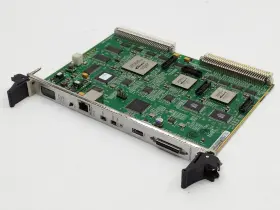
( Brand: Vme ), ( Manufacturer Part Number: 140E60315A ), ( Part Type: Expansion Card Module )
Review VME Ethernet Dual port Ieee1394 Usb Expansion Card Module
The VME 140E60315A CRM2 Ethernet Dual-Port IEEE1394 USB Expansion Card Module is a versatile and high-performance expansion card designed for use in VMEbus-based systems. This module provides two independent Ethernet ports, each supporting 10/100/1000 Base-T Ethernet, and a single USB 2.0 port, allowing for seamless integration of Ethernet and USB devices into your system.
The VME 140E60315A CRM2 module is based on the Intel 82574L Ethernet controller, which delivers reliable and high-speed data transfer, making it ideal for applications requiring real-time communication and data exchange. The module supports both TCP/IP and UDP/IP protocols, ensuring compatibility with a wide range of networked devices.
The IEEE1394 USB expansion port on this module provides a high-speed interface for connecting USB devices, such as hard drives, cameras, and peripherals. The USB 2.0 interface offers a maximum data transfer rate of 480 Mbps, ensuring fast and efficient data transfer between the USB device and the VMEbus system.
The VME 140E60315A CRM2 module is designed with a compact form factor, making it easy to integrate into VMEbus systems. It features a ruggedized construction, with conformal coating and shock and vibration resistance, ensuring reliable operation in harsh environments. The module also supports VMEbus signal levels, making it compatible with existing VMEbus systems.
In summary, the VME 140E60315A CRM2 Ethernet Dual-Port IEEE1394 USB Expansion Card Module is a powerful and versatile expansion card that provides reliable Ethernet and USB connectivity for VMEbus-based systems. Its high-speed data transfer rates, support for various network protocols, and ruggedized construction make it an ideal solution for a wide range of applications, including automation, test and measurement, and defense and aerospace.
Pros of buying VME 140E60315A CRM2 Ethernet Dual-Port IEEE1394 USB Expansion Card Module:1. Increased connectivity options: The card provides dual Ethernet ports and IEEE1394 (FireWire) connectivity, as well as USB 2.0, making it a versatile solution for a wide range of applications.
2. Compatibility: The card is compatible with VMEbus-based systems, which are widely used in industrial automation, aerospace, and defense industries.
3. High-speed data transfer: IEEE1394 and Ethernet support high-speed data transfer, making it ideal for applications that require fast data transfer between devices.
4. Expandability: The card can be easily integrated into existing systems, allowing for additional expansion and upgrading of capabilities.
Cons of buying VME 140E60315A CRM2 Ethernet Dual-Port IEEE1394 USB Expansion Card Module:1. Cost: The card may be more expensive than standalone Ethernet or USB cards, due to its multiple connectivity options and compatibility with VMEbus systems.
2. Complexity: The card may be more complex to install and configure than standalone Ethernet or USB cards, due to its multiple connectivity options and compatibility with VMEbus systems.
3. Limited market: The card is designed for use with VMEbus-based systems, which may limit its market and availability compared to more widely used connectivity options.
Conclusion:The VME 140E60315A CRM2 Ethernet Dual-Port IEEE1394 USB Expansion Card Module is a versatile solution for applications that require multiple connectivity options and compatibility with VMEbus-based systems. Its high-speed data transfer capabilities and expandability make it an attractive option for industrial automation, aerospace, and defense industries. However, its cost and complexity may be deterrents for some users. Ultimately, the decision to purchase the card should be based on the specific requirements and resources of the application.
Recommendation:If you require multiple connectivity options and compatibility with VMEbus-based systems, the VME 140E60315A CRM2 Ethernet Dual-Port IEEE1394 USB Expansion Card Module may be a suitable solution for your needs. However, be aware of its cost and complexity, and ensure that you have the necessary resources to install and configure the card effectively.
Details:
part #: 140e60315a price
- $349.98
specifications servertimber:
- brand: Vme
- mpn: 140e60315a
- part type: Expansion Card Module
seller servertimber:
- rating: 99.4%
- # reviews: 53957
- city: Garden Grove, California
offer servertimber:
- sold: 0
- options: Ship-to-home
- availability: In Stock
- started: July 21, 2024
- quantity: 4
general servertimber:
- condition: Used
- Enterprise Networking, Servers > Server Components > Server Boards
returns servertimber:
- paid by: Buyer
- policy: Returns Accepted
- time: 30 Days
- method: Money back
payments servertimber:
- credit card: Discover
- other
- wallet: Paypal
shipping servertimber:
- carrier: FedEx
- service: FedEx Ground or FedEx Home Delivery, FedEx Priority Overnight
- transit: 4-6 Days
- type: Calculated
- class: Standard, One-day
- cost: $22.54
Vme 140E60315A Is Similar To:
- Vme 140e61090a Vmebus Ethernet Dual-port Ieee1394 Usb Expansion Card Module (90.5% similar) Part #: Vme 140E61090A for sale...(July 21st, 2024)
- Xerox 140e61050a Miop-3d Ethernet Debug Spdb Ssib Control Vme Card Module (57.5% similar) Testing cosmetic notes: this is a used working item in good cosmetic condition that was pulled from a environment and guaranteed working, unit missing the top handle. This is cosmetic and does not affect the functionality of item...(July 21st, 2024)
- Vme 140e63582b Xic2r Dual-port Sfp Idata Module Ssci Vmebus Board Card (49% similar) Part #: Vme 140E63582B for sale...(July 21st, 2024)